I turn ambiguous enterprise problems into solvable ones.
I've scaled design from 2 to 20+ by creating the frameworks that make decision-making clear—from compliance constraints to revenue impact. Now I'm looking for a Director role where I can do that at the next scale.
Measurable Impact
Enterprise outcomes in regulated environments where wrong decisions cost money.
40%
Design-to-Dev Cycle Reduction
By building modular design system governance that reduced translation time and stakeholder debate.
20+
Years Across Enterprise
Health-tech, consulting, engineering, and regulated gaming. I've seen what breaks when compliance doesn't align with UX.
3
Patents for Innovation
For interaction models in mobile platforms. Proves I don't just execute—I solve novel problems.
2→20+
Teams Scaled
And stayed psychologically healthy. The structure matters more than headcount.
How I Operate
Not theory—the decision framework I use to unblock messy enterprise problems.
01
Clarity & Accountability
Enterprise chaos comes from ambiguous briefs. I translate stakeholder conversations into clear OKRs and written decision frameworks.
When product says "better UX," I ask: For whom? What's the revenue impact? By the time we design, everyone knows why.
02
Strategy Into Outcomes
Strategy is useless if it doesn't move a metric. I use research and ruthless prioritization to navigate ambiguity.
Rules & Rewards wasn't a UX problem—it was a market positioning problem. I reframed it and changed how the market sees Aristocrat.
03
Scaled Teams at Scale
Design teams break when leadership is unclear. I build structure: shared vocabulary, decision frameworks, psychological safety.
When design scaled from 2 to 20+, I built three things that made scale possible—not just hired faster.
Featured Work
Enterprise problems where constraint navigation was the core of the solution.
Enterprise Modernization
Diagnostic Monitor: Tech Migration with UX Foundation
The Problem
Aristocrat's flagship was trapped in WinForms. Competitors moved to web. We had to migrate a 15+ year legacy system to modern architecture while keeping 300+ properties running 24/7—with zero downtime. Full UX overhaul was impossible.
How I Solved It
Workflow Mapping: Audited 9 critical operator workflows. Operators had invisible mental models that had to survive the migration. Translated those into Angular patterns that felt native while preserving logic.
Design System Application: Built components that mirrored existing behavior exactly. Status Indicator had to work like the WinForms version—operators had muscle memory. Elegance comes in Phase 2.
Stakeholder Alignment: Product wanted features, compliance wanted zero risk, ops wanted zero friction. Positioned Phase 1 as a bridge, not a destination. Built a public roadmap.
Technical Handoff: Handed off decision rules, not just Figma files. Reduced dev questions by 60% because devs understood the logic.
Outcomes
9 workflows migrated with zero downtime
100% operator task completion maintained
30% faster delivery through clear design-dev handoff
55% task completion increase in Phase 2
Retention Strategy · SaaS
Rules & Rewards: From Tool to Market Position
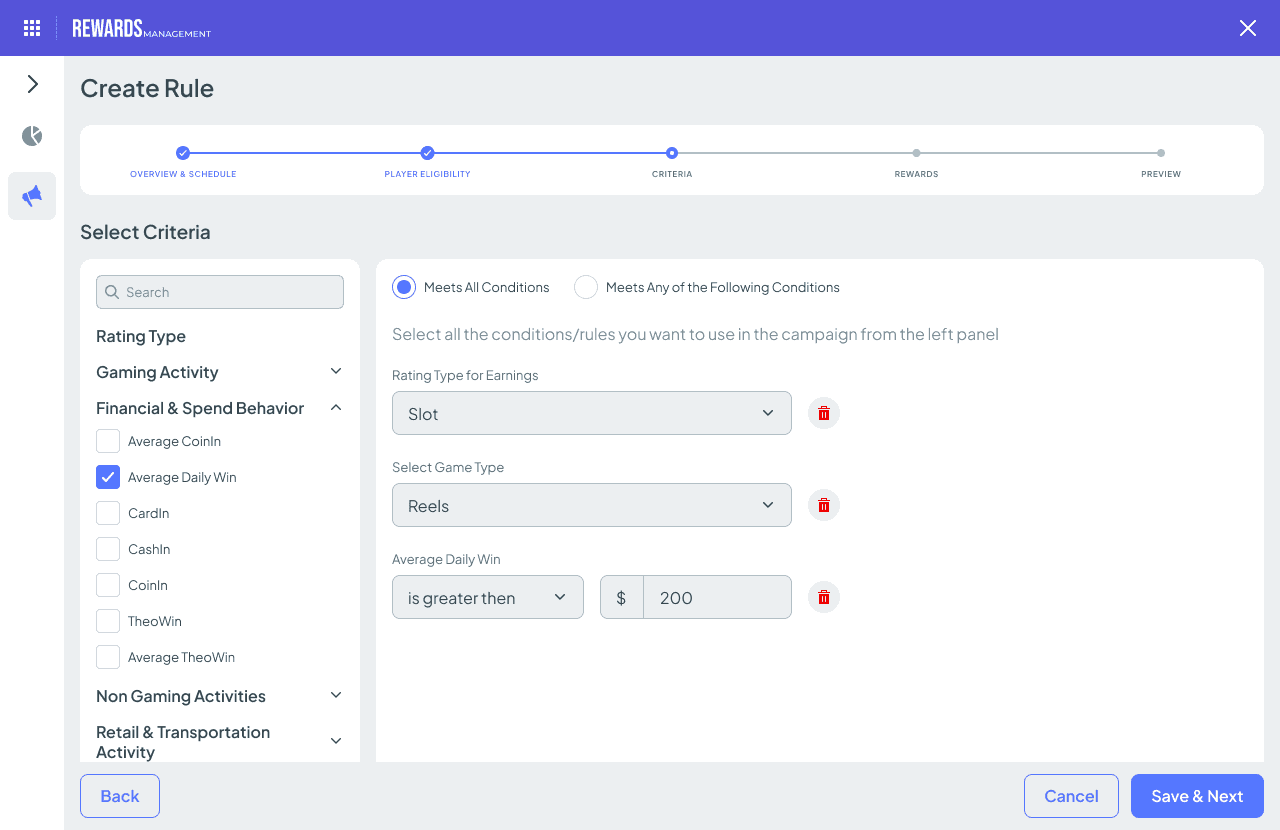
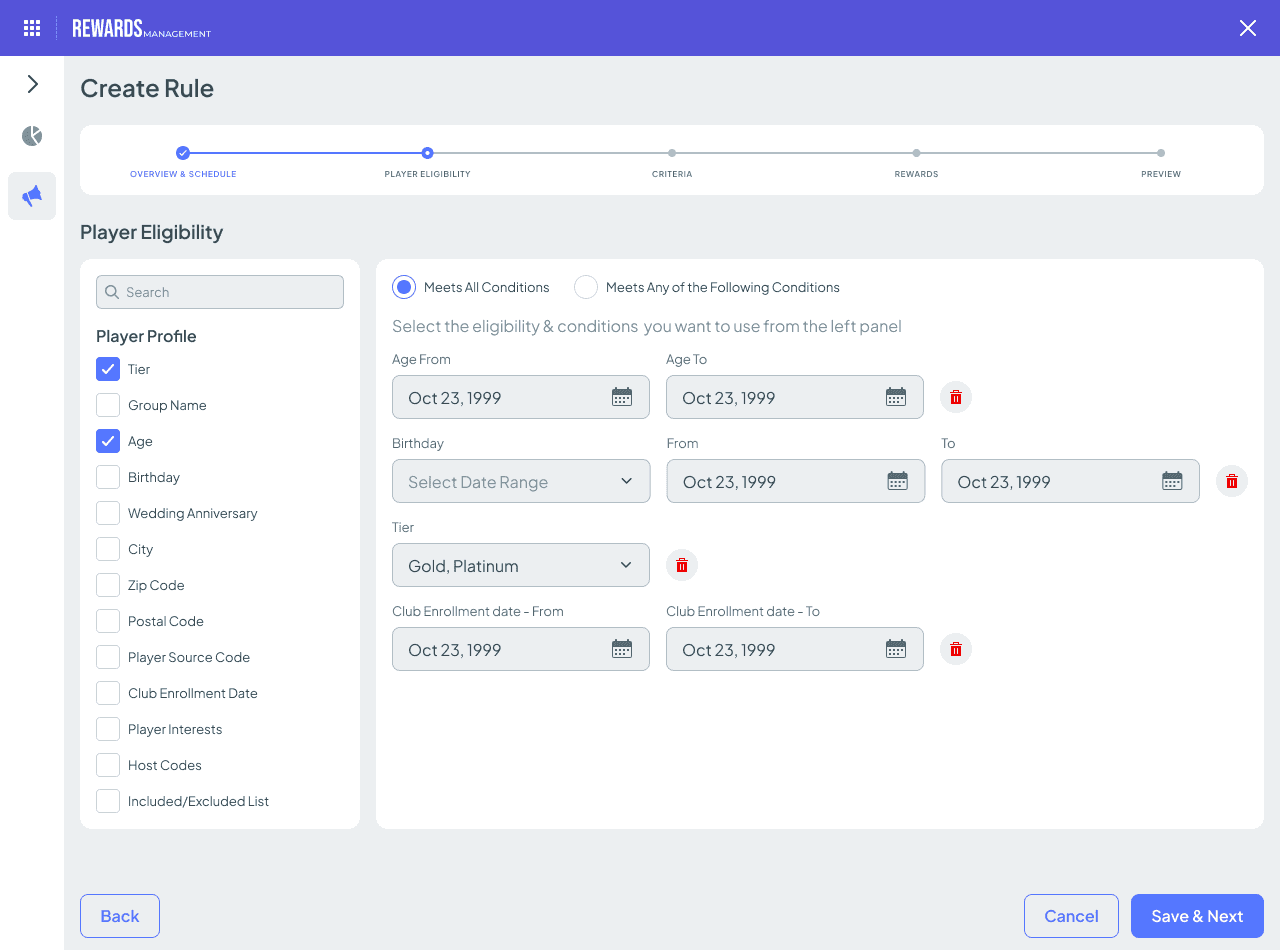
The Problem
Marketing teams couldn't create loyalty campaigns without engineering. 4-day turnaround. 90% manual error rate. But the real problem: Aristocrat wasn't positioned as the modern, AI-forward casino software leader that competitors claimed to be.
How I Solved It
Problem Reframe: This wasn't a "tool complexity" issue—it was a market positioning problem. Shifted conversation from "fix the tool" to "what does this tool say about us?"
Self-Service Architecture: Built an abstraction layer—Campaign Builder—that marketers could use without touching rule logic. Marketing answers questions; the system generates complexity.
Interaction Design: Showed marketers their decisions, not the system model. Built validation before handoff. Added "AI-suggested rules" as feature (strategic narrative + practical value).
Stakeholder Win: Engineering kept their powerful rules engine. Marketing got self-service. Leadership got positioning story: "Aristocrat is AI-forward and modern."
Outcomes
Campaign time: 4 days → 30 minutes
8x faster campaign velocity
Eliminated 90% of manual errors
Core sales differentiator: "AI-forward loyalty platform"
Other Work
More enterprise platforms where the real work was constraint navigation.
Global UX Transformation
Redesigned critical jackpot processing system. Led UX strategy across globally distributed teams, reduced processing time by 20%.
Mobile Platform · Innovation
PlayerMax: Patent-Worthy Experience
Pioneered mobile-first casino platform that unlocked new revenue channel. Interaction model earned patent. 2× revenue impact.
Consumer Mobile · Search
Tata 1MG: India's Health Platform
Fixed broken search for millions seeking medicines and consultations. Research-driven redesign doubled utilization.
Design Systems · Governance
Aristocrat Design System
Built modular system governance across 12+ applications. Reduced design-to-dev cycle by 40%. Set standards that scaled across teams.
What Colleagues Say
"Pooja demonstrated deep understanding of complex problems and applied her knowledge to drive successful outcomes. Her proactive approach and excellent communication skills make her invaluable."
Associate Director - UX, Nagarro
"She consistently focused on aligning user needs with project goals and was thoughtful in her approach. She asked good questions during discussions and contributed to clearer decision-making in complex situations."
Senior UX Designer, Microsoft
"Pooja is a seasoned UX leader with a sharp eye for detail and a strategic mindset. Her ability to balance user needs with business goals is exceptional."
VP Engineering
What I'm Looking For
Roles
- Design Director
- Head of UX / Head of Design
- VP of Experience Design
- UX Director
Organizations
- Global SaaS · Regulated Enterprise
- Consumer Scale · Multi-product
- Teams of 5–30 designers
- Where UX is a business lever
I want places where design input shapes decisions, not order-taking roles. If you have a messy problem and want someone who can make it solvable—let's talk.